on Tripadvisor


Waterholes are, naturally, a magnet at any Etosha safari – both for wildlife and spectators. Here, survival often comes down to a delicate balance between need and caution. As the dry season takes hold, thirsty animals are drawn repeatedly to the same precious sources of water.
This creates predictable patterns that predators in Etosha National Park are quick to exploit. Zebras, wildebeest, springbok and other prey species often approach in large herds. They rarely do so without first scanning the surrounding landscape for danger.
Lions, leopards, cheetahs and hyenas, meanwhile, know that waterholes can offer opportunities to hunt – though a successful kill is never guaranteed. The interaction between prey and predator creates tension, not only for the animals themselves but also for human spectators.
Why Etosha’s Waterholes Are the Centre of the Action
On an Etosha safari, you’ll experience a landscape shaped by extremes. Vast open plains, and an intense dryness both demand a near-constant search for water. The Etosha Pan, an enormous expanse of salt and shimmering white, is the park’s defining feature.
During the dry months, water becomes the focus of daily life. You’ll find wildlife repeatedly returning to a mix of permanent and artificial waterholes. Scattered across the landscape, they become natural meeting points for species that might otherwise rarely cross paths.
For prey animals, there is often little choice but to approach water. Predators know this too, and understand the patterns of movement that bring animals to these precious sources. It’s important to note, however, that this kind of behaviour doesn’t turn a waterhole into a scene of instant drama.
More often, the appeal lies in the waiting, as you watch animals cautiously approaching, scanning the surrounding bush for movement. It is the anticipation – and the possibility of what might happen – that makes it so compelling to watch wildlife at Etosha waterholes.

How Predators Use Etosha’s Waterholes to Hunt
It is important to note that Etosha predators don’t necessarily wait beside waterholes for thirsty animals to arrive. Instead, they often position themselves along the routes wildlife regularly use to reach water. This allows them to take advantage of vegetation, low light or other cover to remain concealed.
Different predators use the landscape in different ways: Lions and leopards can benefit from cover, using ambush tactics to get close to their prey. Cheetahs, by contrast, rely on speed and need open ground to pursue their targets. This means they generally hunt farther from the immediate edge of the waterhole.
What remains the same for all predators in Etosha National Park, from lions to leopards to cheetahs: By watching animal movements and recognising familiar patterns, they can choose when and where to make their move.
Timing is crucial, particularly when several animals are gathered around a waterhole and vigilance is high. In addition, the right wind direction is another important factor – it helps predators avoid alerting potential prey to their presence.
Lions: Dominating the Waterholes After Dark
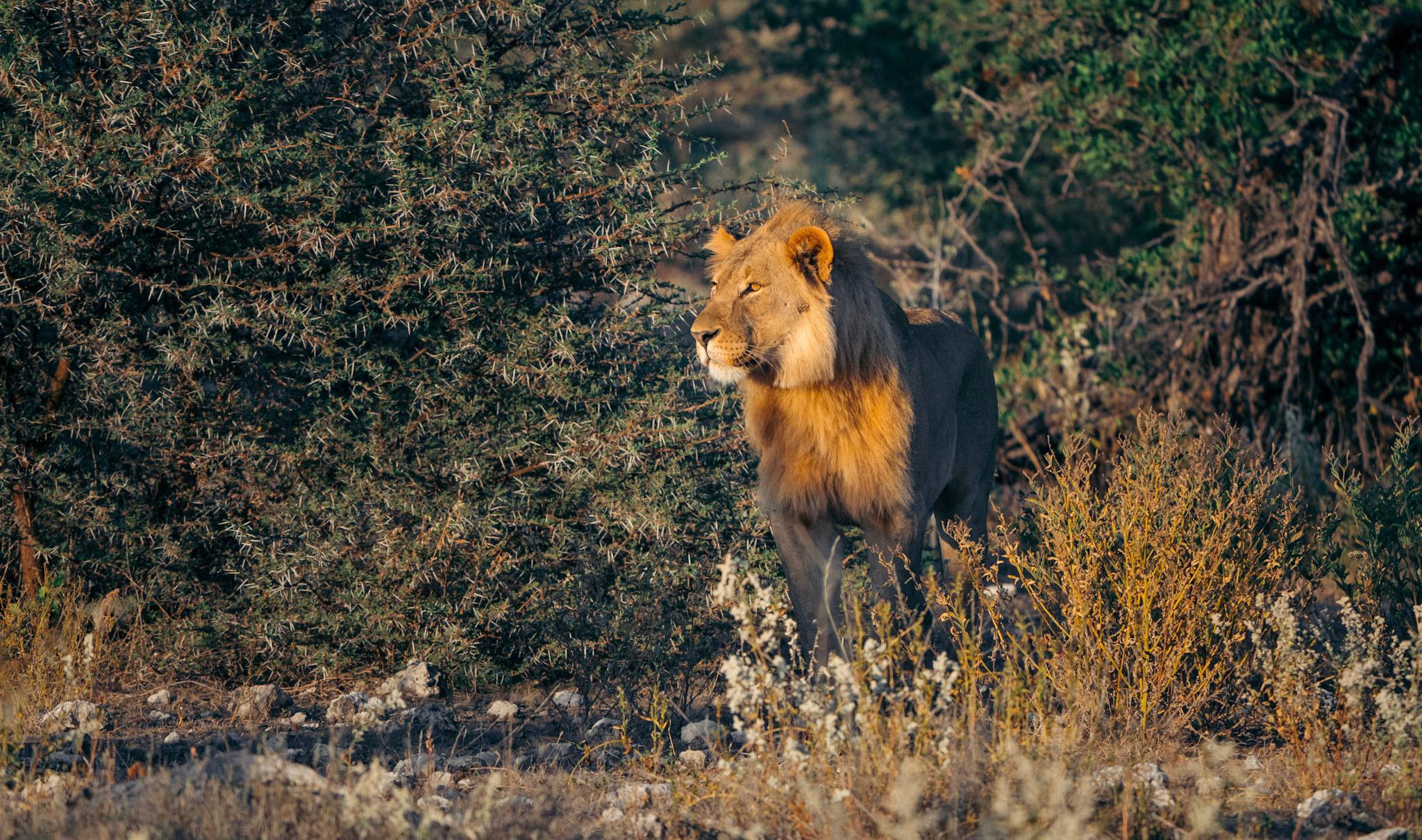
Lions are among the most compelling predators in Etosha National Park, particularly during the cooler hours when their activity increases. During the heat of the day, there may be less action as prides tend to rest in the shade. They are conserving energy while remaining within reach of passing wildlife such as zebra, wildebeest and different antelope species.
As temperatures drop, Etosha lions become more active, using these predictable gathering points to their advantage. Rather than rushing into a hunt, they watch potential prey approaching the water, waiting for the right moment to attack. When a hunt begins, pride members usually work together to stalk, surround and pursue their target, using cooperation to increase their chances of success.
Why Are Lions Often Seen Near Etosha Waterholes?
As in other parks and reserves, wildlife at Etosha’s waterholes is more concentrated than in the otherwise dry landscape. This makes the surrounding areas particularly attractive to lions as well as other Etosha predators. Seeing a lion near the water, however, does not necessarily mean a hunt is about to begin.
It may simply be resting after the heat of the day or a hunt, drinking or quietly observing potential prey. While more meditative than action-filled, that watchful stillness can be just as fascinating as the chase itself.

Leopards: The More Elusive Waterhole Hunter
Unlike lions, which often operate in prides, leopards are solitary and secretive hunters. They rely heavily on cover, using dense vegetation and the surrounding landscape to remain hidden as they watch for opportunities. At some waterholes, vegetation around the edges can provide useful concealment, allowing a leopard to approach without immediately being detected.
Rather than targeting large herds, these graceful hunters typically prey on smaller antelope and other medium-sized hooved animals. After a successful hunt, they often drag their kill into a tree or retreat into dense cover. This allows them to keep their hard-earned meal away from potential competitors.
Leopards are predominantly nocturnal, so all in all, they are considerably harder to spot than Etosha lions. The chances of encountering one may increase after dark, when they can move more discreetly. This is precisely what makes a leopard sighting so special. A fleeting glimpse of this elusive predator can feel like a real privilege.
Cheetahs: Hunting Away From the Water’s Edge
As opposed to lions and leopards, Etosha cheetahs rarely hunt by lying in wait beside or near a waterhole. Rather than targeting animals as they come to drink, they watch for prey moving between grazing areas and water.
As the fastest land mammal on earth, their hunting strategy depends on three things: visibility, open terrain and enough space to accelerate. They need to get close enough without being detected, and choosing the right moment is vital.
Cheetahs choose places where they can make the most of the landscape like the open plains around Etosha’s waterholes. Here, the clear visibility allows them to spot suitable prey, like springbok, some distance away.
It will then use vegetation or a slight rise in the ground to get closer before breaking cover. The crucial moment is not simply how fast it can run, but when and where it chooses to start the chase. In order to be successful, positioning, timing and acceleration all have to come together before the sprint begins.
Spotted Hyenas: Hunters, Scavengers and Opportunists
Spotted hyenas are far more than the scavengers they are often portrayed as. Intelligent, highly social and formidable hunters, they can absolutely pursue and bring down prey themselves. That being said, they are known for taking advantage of opportunities left by other predators.
Around Etosha’s waterholes, their paths often intersect with those of lions, competing for food and access to kills. While hyenas may attempt to steal a lion’s kill, the rivalry works both ways. Lions will also drive hyenas away and take their food when they get the chance.
Like in other parks, Etosha hyenas become particularly intriguing after dark. Their distinctive calls can carry across the open landscape, revealing their presence long before they themselves appear.
Listen carefully and you may hear a clan moving through the darkness, communicating and coordinating as they search for food. Their combination of hunting skill, social intelligence and opportunism makes them one the most fascinating predators on any Etosha safari.
Black-Backed Jackals: Small Predators with Big Opportunities
Black-backed jackals may lack the size and power of Etosha’s big cats, yet they have an important role to play. Opportunistic by nature, they often scavenge around kills made by larger predators, darting in to grab scraps.
Snatching a mouthful before retreating to safety always requires a watchful eye: While lions and other Etosha predators are their main adversaries, they also have to compete with vultures for the remains.
Their constant alertness is essential in a landscape shared with much larger carnivores. However, jackals are hunters in their own right, feeding on rodents, birds and other small prey whenever the opportunity arises.

The Prey Species Taking the Biggest Risks
For prey species, reaching a waterhole is a calculated risk. Animals may pause before approaching, scan the surroundings repeatedly and drink in groups, responding instantly to alarm calls. A sudden movement or warning cry can send an entire herd retreating, turning the waterhole into a real-life nature documentary set.
Zebra and Wildebeest
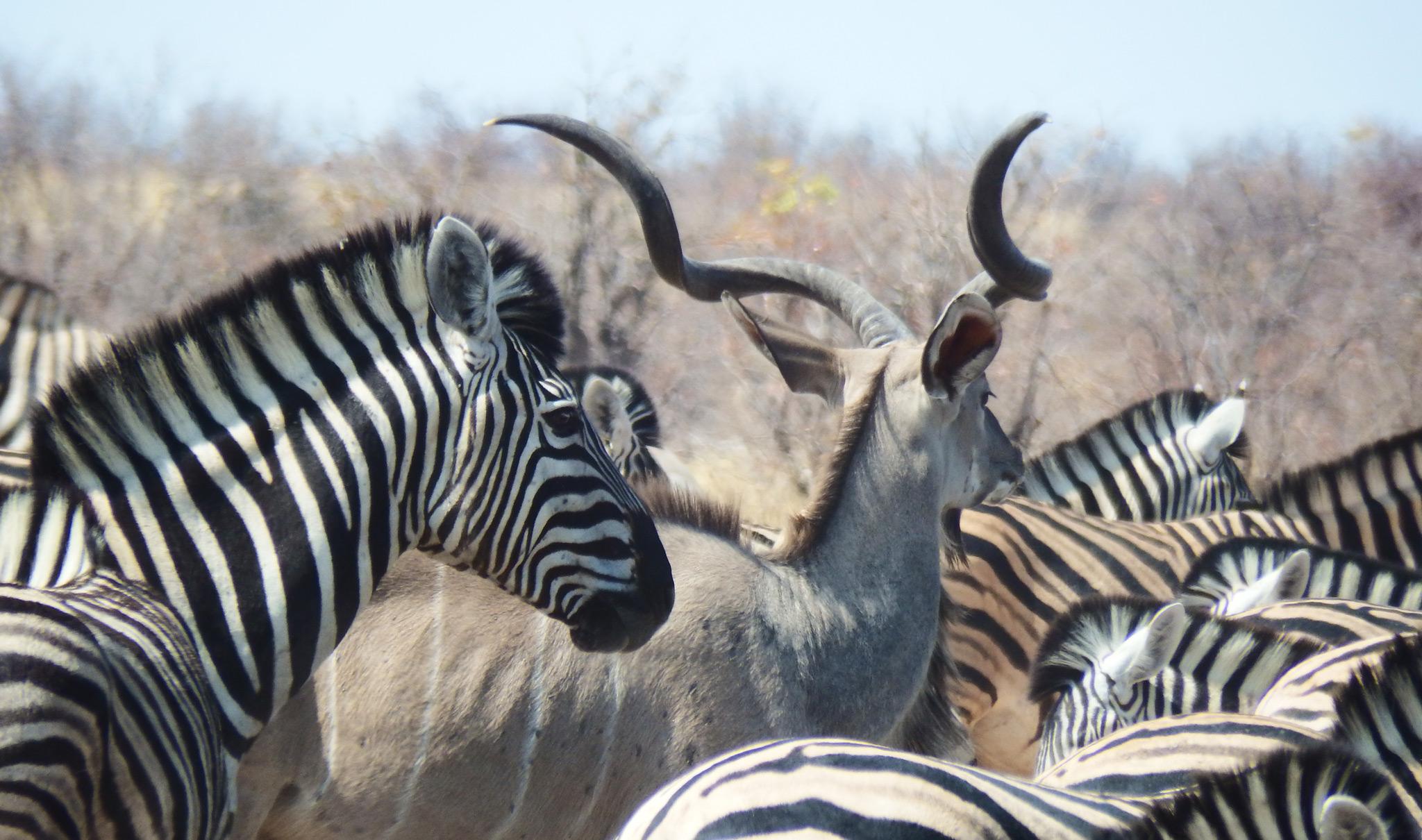
Zebra and wildebeest rely heavily on group vigilance when approaching water. More animals mean more eyes and ears to detect a lurking predator. True to the principle of strength in numbers, individuals take turns drinking while others remain alert. Yet even in a herd, animals can become separated or distracted – creating opportunities for predators to single out vulnerable individuals.
Springbok
Springbok combine attributes like speed, attentiveness and agility to stay one step ahead of predators. Around waterholes, they remain constantly watchful, ready to react to the slightest sign of danger. They are able to accelerate quickly and change direction suddenly. This makes them particularly challenging for cheetahs relying on a split-second decision to determine the outcome of a chase.
Oryx
Armed with long, sharply pointed horns and a powerful build, Oryx are imposing animals and far from easy prey. Their horns are not only a serious deterrent to predators looking for an easier target – they can also deliver a formidable warning. Yet, while they are easily capable of defending themselves if threatened, these majestic animals remain alert around waterholes.
Giraffes
For giraffes, drinking is an unusually vulnerable exercise. They must lower their necks towards the water, adopting a wide-legged posture that makes a rapid response more difficult. While it may be an extraordinary sight for visitors, this vulnerable posture leaves giraffes more exposed to predators, particularly lions. They therefore tend to remain alert, ready to retreat at the first sign of danger.

Predator vs Prey: What Actually Happens at a Waterhole?
In Etosha, waterholes are busy places. Giraffe and zebra edge towards the water, pausing to scan the surrounding bush before lowering their heads to drink. Wildebeest gather behind them, while springbok linger at a safer distance. Some animals drink; others remain watchful, their ears flicking at every unfamiliar sound.
Then something changes. Birds become restless. Individual animals lift their heads and stare into the distance. For a moment, nothing happens. All present creatures seem to pause and to hold their breath.
And then, without warning, the entire waterhole erupts into movement. Heads shoot up, and animals scatter in every direction, kicking up dust and causing mayhem in the process. A predator may have appeared, or it may just be one animal that sensed something – who knows.
A waterhole does not need to deliver a dramatic chase or kill to be fascinating. Often, the anticipation, sudden reactions and fleeting moments of tension are enough to make for a compelling and memorable wildlife encounter.
What Happens at Etosha’s Waterholes at Night?
As darkness falls over Etosha, the atmosphere around its waterholes changes completely. The daytime commotion gives way to shadows, unfamiliar sounds and a heightened sense of anticipation. As temperatures drop, Etosha wildlife becomes more active, leaving the shade and shelter, with lions going on the prowl again.
Black-backed jackals may appear around the waterhole, scavenging for scraps or searching for smaller prey. Meanwhile, spotted hyenas get ready to move through the darkness, their distinctive calls carrying across the open landscape.
Now and again, there may be a chance of a leopard slipping silently through the darkness. These elusive cats are difficult to spot at the best of times, and night gives them even more cover. After nightfall, perceived movements and unfamiliar sounds can become a source of intrigue, making floodlit waterholes all the more appealing.

The Best Etosha Waterholes for Wildlife Watching
Not all of Etosha’s waterholes offer the same experience; conditions can change with the season, weather and recent animal movements. Rather than compiling a long list, let us point out a few areas that are particularly worthwhile starting points.
Offering visitors the chance to observe wildlife from a fixed vantage point, Okaukuejo’s waterhole is a favourite spot on any Etosha safari. It is equipped with floodlights that add a different dimension to wildlife encounters after dark.
Around Halali, several waterholes are accessible along the surrounding game-drive routes. The Namutoni area, meanwhile, provides further opportunities to stop and observe wildlife while exploring the eastern part of the park.
Ultimately, the most “exciting” waterhole can change from day to day. Guides and experienced drivers often rely on recent sightings, local knowledge and their understanding of animal movements to decide where to head. Keeping an open mind can be just as rewarding as following a fixed itinerary.
When Is the Best Time to See Predators at Etosha Waterholes?
The dry months generally offer the best conditions for watching predators at Etosha’s waterholes. As natural water sources diminish, wildlife becomes increasingly concentrated around the park’s permanent waterholes – natural as well as man-made. For visitors, this creates more predictable opportunities to observe predator-prey interactions.
Early mornings and late afternoons, when temperatures are cooler and many animals are more active, are particularly rewarding. As darkness falls, floodlit waterholes offer a very different experience, with nocturnal predators in Etosha National Park. Now, lions, hyenas, and the occasional leopard all become more active.
Even in the dry season, however, there are no guarantees. Predators do not follow a timetable, and their movements can vary from day to day. Patience, repeated visits and a little luck remain essential ingredients for a memorable sighting. If you want to find out more, read or blog on the best time to visit Etosha National Park.
Is Etosha Good for Seeing Predators?
Yes, Etosha offers some excellent opportunities to see predators. Particularly around its waterholes, where wildlife is drawn together by the scarcity of water, it pays off to linger longer. While game like zebra, antelope or even elephants can arrive in herds, predators are more elusive.
In terms of Etosha predators, lions are somewhat conspicuous, spotted hyenas are more likely to appear unexpectedly. Cheetahs, too, require a little more luck, and leopards are particularly elusive, often revealing themselves only briefly, if at all. Yet, this unpredictability is part of Etosha’s appeal.

How to Watch Predator Behaviour Without Rushing
The best predator sightings on an Etosha safari often reward patience rather than constant movement. It generally pays off to stay for a while once you have found an active waterhole. Where permitted, switch off the engine and watch the wildlife as closely as the water itself.
Sometimes the best action starts with not seeing the predator at all, but noticing how the animals around you react to its presence. Resist the temptation to move on simply because nothing seems to be happening. If you look close enough, you’ll soon notice signs that something is about to happen.
For a deeper understanding of Etosha’s wildlife, consider joining a guided drive. All our self-drive guests staying at least two nights enjoy a complimentary full-day game drive in our open Land Cruiser.
Favourite Tours:

Namibia Highlights
Places Windhoek, Namib Desert, Swakopmund, Spitzkoppe, Erongo Mountains, Damaraland, Etosha National Park, Waterberg Plateau
from getting current exchange rate… per person sharing

Fascinating Namibia
Places Windhoek, Kalahari, Namib Desert, Swakopmund, Erongo Mountains, Damaraland, Etosha National Park, Waterberg Plateau
from getting current exchange rate… per person sharing
Plan Your Own Etosha Predator Safari
For the best chance of seeing predators in Etosha National Park, careful planning can make all the difference. Talk to our experienced travel experts to plan your stay around the best locations and times for wildlife watching. They can help you choose camps close to active waterholes, allowing you to spend less time driving and more time observing.
Give yourself enough time for guided or self-drive Etosha safari, too. Staying for several days gives you more opportunities to observe changing animal behaviour and unexpected encounters.
The goal is not simply to see a predator – rather take the time to watch the action unfold. And always remember: In the bush, there is no need to hurry.