on Tripadvisor


Etosha National Park in Namibia and Kruger National Park in South Africa rank among Africa’s most celebrated safari destinations. Each offers its own distinct landscapes, wildlife encounters and atmosphere.
But which one should you choose – Etosha vs Kruger? With our sister company on the ground in South Africa and our team based in Namibia, we know both parks inside out and always have the latest insights from the bush.
While both parks are appealing to nature lovers, first-time visitors and families alike, the answer ultimately depends on one thing: The type of safari experience you’re after.
Namibia is famed for its wide, open landscapes, and the salt pans of Etosha draw lots of animals. This makes it perfect for concentrated game viewing.
Kruger National Park, on the other hand, is characterised by lush bushveld and is teeming with animals.
To help you make a decision, we’ll compare Etosha vs Kruger and outline the main differences.
Overview & Key Differences
Etosha vs Kruger differ in size, scenery and overall safari style. Etosha’s vast salt pan is visible from space.
Its waterholes attract incredible concentrations of wildlife, especially during the dry season. It offers a more arid, open environment, making animal spotting relatively easy.
Located in South Africa and bordering Mozambique, Kruger is larger. It boasts diverse habitats that range from dense bush to riverine forest and support a huge variety of species.
While Etosha delivers drama in stark, photogenic settings, Kruger offers more traditional “big game” safari experiences. Here, you not only find a broader range of accommodation. Kruger also offers plenty of self-drive routes and guided tour options, whereas Etosha is geared more towards self-drivers.
While guided game drives do exist, infrastructure and layout are particularly suited for visitors exploring independently in their own vehicle.
Location & How to Get There
While both national parks are located in Southern Africa, Etosha can be found in Namibia and Kruger in South Africa.
They are more or less on opposing sides of the continent. To visit them both you’d have to cover around 2,000 kilometres (1,250 miles). So let’s look at Etosha vs Kruger location.
Etosha
Etosha lies in northern Namibia, approximately a five- to six-hour drive from the capital, Windhoek. The park can be reached via well-maintained tarred roads, with four main gates providing access.
Once inside, most of the game-viewing network consists of good-quality gravel roads that cater to self-drive safaris.
The nearest airports are Ondangwa and Hosea Kutako International in Windhoek. From here, visitors can hire a car or join an organised tour like the Namibian Explorer.
Accommodation inside the park mainly consists of well-established rest camps. In addition, there are also some luxury lodges in nearby private reserves just outside the gates.

Kruger
Kruger is located in north-eastern South Africa, straddling the provinces of Limpopo and Mpumalanga. Visitors can enter through multiple gates, many of which are close to regional airports, including Hoedspruit and Kruger Mpumalanga International.
Direct flights to these airports leave from Cape Town, Durban and other regional cities, making it easy to get there. Additionally, excellent road networks connect Kruger to major cities like Johannesburg and Pretoria as well as Maputo in Mozambique.
Kruger is easily navigable for self-drivers and can also be visited on organised tours. Like Etosha, it offers a mix of camps and private lodges within private concessions.
Wildlife Experience & Species
Both Etosha and Kruger deliver unforgettable wildlife encounters, yet the style and setting of these experiences differ greatly. From Etosha’s open salt pans to Kruger’s dense bushveld, each park has its own rhythm and rewards for safari-goers. Let’s look at Etosha vs Kruger from a wildlife perspective.
Etosha
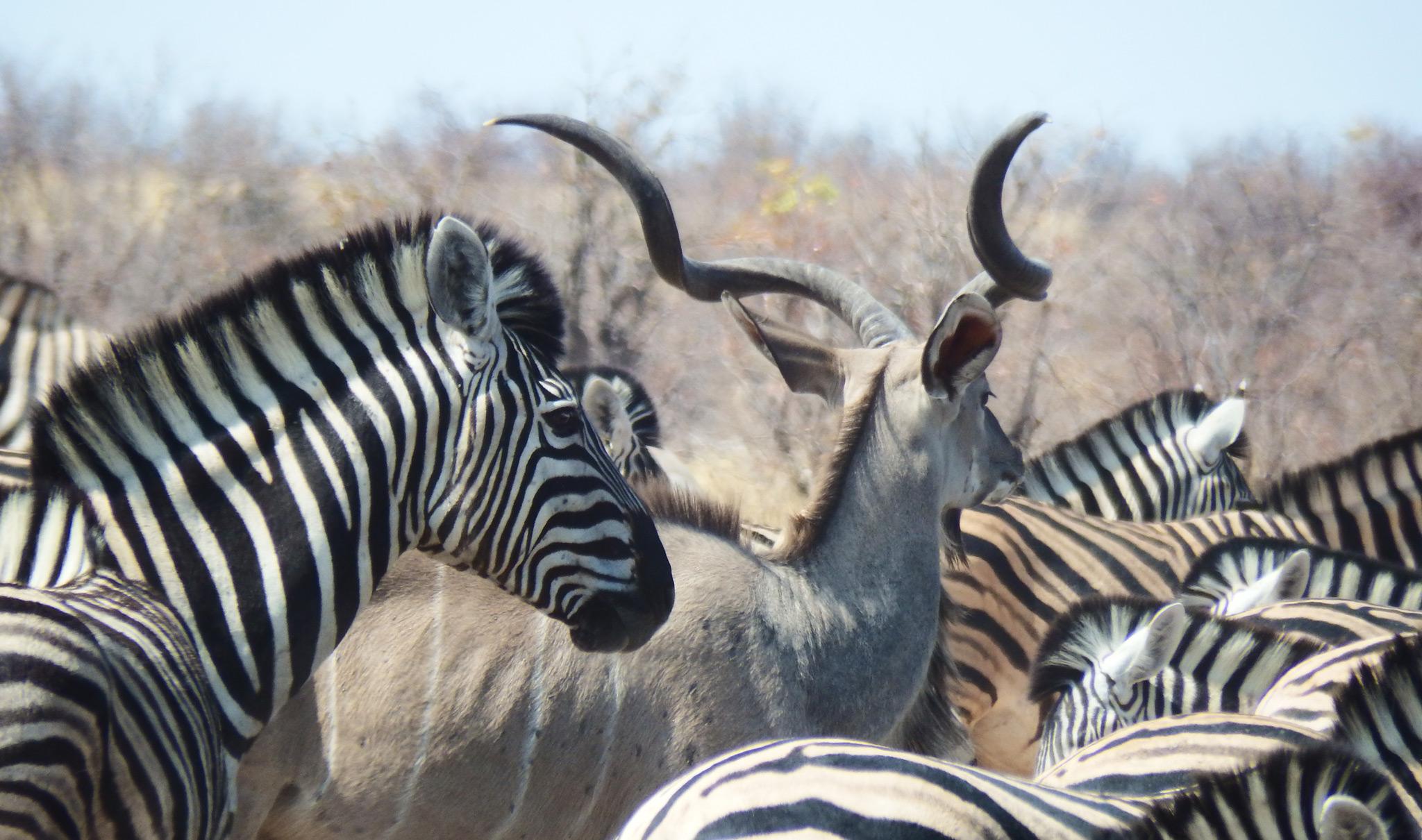
Etosha is renowned for dramatic wildlife encounters, particularly around its waterholes where animals gather in impressive numbers during dry season. Visitors can expect to see elephants, lions, giraffes, rhinos, and large herds of antelope.
The park’s open landscapes make spotting game relatively easy, making it a dream destination for many photography enthusiasts. With hippos and buffalo missing from the park, the Big Five are not fully represented.
However, Etosha’s sheer abundance of wildlife delivers a uniquely rewarding safari experience.
Kruger
Kruger offers one of the most diverse wildlife experiences in Africa, with the full Big Five readily seen in the right areas. Apart from lion, leopard, elephant, buffalo, and rhino, its varied habitats support over 140 species of mammals.
In addition, you can find a wide variety of reptiles, amphibians and an impressive birdlife. The dense bush adds an element of surprise to sightings, as you never know what to expect next.
Guided drives and walks provide deeper insight into animal behaviour and the complex ecosystems at play.

Birdwatching & Migratory Spectacle
For keen birders and casual observers alike, both parks are avian havens, each with its own seasonal highlights. The arrival of migratory species adds an extra layer of wonder to the already rich birdlife.
Kruger
Kruger is home to over 500 bird species, making it one of Africa’s premier birding destinations. From colourful bee-eaters and kingfishers to powerful raptors, the diversity is extraordinary.
The African summer months (December – February) bring an influx of migratory species, including cuckoos, swallows, and storks.
Birdwatching routes and hides are scattered throughout the park, offering plenty of opportunities to enjoy the seasonal spectacle.
Etosha
With more than 340 recorded species, Etosha is a birdwatcher’s delight. The summer rains transform the salt pan into a seasonal wetland that attracts thousands of flamingos, pelicans, and other waterbirds.
Migratory species from Europe and elsewhere in Africa join the resident birds, creating a vibrant avian scene.
Birdwatching is especially rewarding from November to April, when both wetland and savannah species can be observed in abundance.

Landscapes & Scenery
The landscapes of Etosha and Kruger are strikingly different, offering contrasting safari experiences.
Dominated by vast salt pans, open savannahs, and sparse woodland, Etosha creates a stark yet photogenic environment.
With its rolling hills, Kruger, by contrast, is more lush and green. It provides a variety of habitats, from dense bushveld to riverine forests, and grasslands.
While both parks are beautiful in their own right, the scenery shapes the way animals are spotted. These contrasts not only make each park a unique destination but they also determine the different types of safari experiences.
Both parks offer a well-established infrastructure including tarred and gravel roads in good condition. Travellers can choose from a vast network of camp sites with shared ablution blocks and kitchen facilities. Lodges are usually available in private concessions or just outside each park.
Whether more rustic or high-end luxury, all accommodations have one thing in common: They are situated in some of the most stunning environments Africa has to offer.
Etosha
Etosha’s scenery is defined by the enormous Etosha Pan. Stretching over 4,800 square kilometres (close to 1.2 million acres), this flat, white salt pan is visible from space. It is surrounded by plains, sparse woodlands, and seasonal waterholes that add to the natural beauty and drama.
While the open landscape is ideal for game viewing, the scenery is a sight to behold in its own right. The contrast between the dry, pale pan and the darker vegetation creates a distinctive, almost otherworldly atmosphere.
Kruger
Kruger boasts diverse terrain, from dense bushveld and riverine forests to open grasslands and rocky hills. This variety supports a wide range of wildlife and offers ever-changing vistas.
Rivers and watering holes punctuate the landscape, creating scenic spots for game viewing and photography. The lush greenery of the wet season contrasts sharply with the golden grasses of the dry season. It is this contrast that lends the park a dynamic and vibrant character throughout the year.

Best Time to Visit
Choosing the right time to visit Etosha or Kruger depends on your safari priorities. In Etosha, the dry season runs roughly from May to November. It is best for spotting wildlife, as animals concentrate around waterholes, making sightings more predictable.
The rainy season, from December to April, brings lush landscapes, fewer tourists, and excellent birdwatching opportunities.
Kruger’s dry winter months, from May to September, are ideal for wildlife visibility. This is when vegetation thins due to lack of rainfall, driving animals to gather near water sources.
The wet summer months from November to March are perfect for viewing newborn animals and enjoying abundant birdlife. During this time of year, you will also experience the park with fewer crowds.
As each season offers distinct advantages, the right time to visit depends on your priorities – animal sightings, birding, or scenery.
Safari Styles: Guided vs. Self-Drive
Both Etosha and Kruger offer a variety of safari styles, catering to different preferences and levels of experience. Self-drive safaris allow you to explore at your own pace, stopping for photographs or observing wildlife whenever you wish.
With its well-maintained gravel roads and easily accessible waterholes, Etosha is particularly suited to this style. Kruger is another favourite with self-drivers, as it offers an extensive road network and well-marked routes.
If you’d like expert insights into animal behaviour, bush ecology, and conservation, guided tours are a better option than self-drive. Whether it’s 4×4 camping safaris, walking tours, or specialised game drives, Kruger offers a particularly wide range of guided options.
Guided safaris can enhance wildlife spotting and understanding, while self-drives provide freedom and flexibility. Choosing between them depends on experience level, comfort preferences, and whether you value expert guidance or independence.
We have a special treat for everyone booking a self-drive trip in Namibia with us! Spend at least two nights in Etosha National Park and enjoy a complimentary full-day guided safari in our open game viewer – led by one of our experienced and knowledgeable guides.
Simply let your travel expert know that you’d like to take advantage of this offer, and they’ll help you arrange everything as part of your booking.

Suitability by Traveller Type
Etosha vs Kruger, each destination suits different types of traveller. Which one you choose highly depends on your particular interests, experience, and pace of travel.
Families
Kruger is very family-friendly: It offers a wide range of accommodation options and self-drive routes suitable for all ages. Rest camps provide amenities such as swimming pools, restaurants, and safe walking trails.
This makes it easy to combine wildlife viewing with comfort and convenience. What’s more: Many of the educational guided safaris on offer in Kruger are kids-friendly.
Etosha is suitable for families who enjoy a more relaxed, self-drive experience. While they ideally bring the right level of confidence required for such an adventure, safari experience is no prerequisite.
Travelling is easy on well-maintained roads, and central waterholes make wildlife spotting straightforward. Rest camps and nearby lodges provide safe, comfortable stays.
With fewer family-oriented facilities and activities available here, it is best for families seeking immersive, nature-focused rather than full-service experiences. Contact our team on the ground in Namibia to find kid-friendly options in and around Etosha.
First-Time Safari Goers
Kruger is ideal for first-time visitors due to its extensive infrastructure and variety of guided safaris. Boasting a high probability of spotting the Big Five, the park offers easy-to-follow self-drive routes and numerous informative rest camps.
This ensures newcomers can make the most of their first safari without any prior experience.
Etosha offers a striking, open landscape and predictable game viewing at waterholes, making it accessible for first-time safari-goers. Self-drives are straightforward, and wildlife is easy to spot. With fewer guided options available, visitors may need to rely on their own observation skills.
Alternatively, you can take advantage of our exclusive offer of a complimentary full day, guided drive available when booking your self-drive safari with us, or book a guided tour to fully appreciate the park.

Tours to Consider
Both Namibia and South Africa offer a range of unforgettable journeys, from self-drive adventures to guided lodge safaris. The following are just some examples that showcase the region’s spectacular landscapes, wildlife, and unique cultural experiences.
Namibia Highlights
The Namibia Highlights self-drive tour allows you to explore the country’s iconic sights at your own pace. From the impressive dunes of Sossusvlei to the wildlife-rich Etosha National Park, this tour combines adventure with comfort.
Experience the stark beauty of the desert, the charm of quaint towns, and the vastness of Namibia’s landscapes. The itinerary combines flexibility with the comfort of pre-arranged accommodations and the knowledge that assistance is just a phone call away.
Fascinating Namibia
The 13-day Fascinating Namibia safari offers an immersive lodge-based experience across the country’s most remarkable destinations. On this trip, you’ll encounter diverse wildlife, striking desert scenery, and the welcoming local cultures.
Each day combines guided activities that present you with plenty of opportunities to witness Namibia’s breathtaking natural beauty. Ideal for anyone seeking a structured yet engaging journey, this safari ensures adventure and relaxation amid the country’s unforgettable landscapes.
South Africa Highlights
The South Africa Highlights self-drive tour takes you from Johannesburg all the way to the southern tip of Africa. Ending in Cape Town, the 21-day itinerary showcases the nation’s most renowned attractions.
It includes wildlife-rich Kruger National as well as South Africa’s spectacular coast and vibrant little towns in the Cape winelands. Designed for flexibility and exploration, the tour allows you to tailor your journey and experience all aspects of South Africa.
Visit Etosha National Park:

Namibian Explorer
Places Namib Desert, Swakopmund, Skeleton Coast, Damaraland, Etosha National Park
from getting current exchange rate… (based on 6 persons)

The Namibia Family Tour
Places Windhoek, Namib Escarpment, Namib Desert, Swakopmund, Damaraland, Etosha National Park, Otjiwarongo Area
Magnificent Namibia
Places Windhoek, Kalahari, Keetmanshoop, Fish River Canyon, Luderitz, Namib Desert, Swakopmund, Erongo Mountains, Damaraland, Etosha National Park, Waterberg Plateau
from getting current exchange rate… per person sharing

A Namibian Journey
Places Namib Desert, Swakopmund, Skeleton Coast, Damaraland, Etosha National Park, Waterberg Area
from getting current exchange rate… (based on 6 persons)
Conclusion – Etosha or Kruger?
Whether you decide on Etosha or Kruger ultimately depends on the type of safari experience you seek. With cost comparisons showing that both countries are pretty much on par, it really is down to your preferences.
Etosha is ideal if you relish vast, dramatic landscapes, the tranquillity of open spaces, and the freedom of self-drive adventures. Its waterholes offer exceptional wildlife sightings, often combined with fewer crowds, which makes for a more solitary and contemplative journey.
Kruger, by contrast, is better suited if you value a greater animal density. Its accessibility and well-developed infrastructure – including a choice of accommodation – make it a versatile destination for different types of travellers.
Here, families are as welcome as first-time safari-goers, and those seeking convenience alongside adventure.
Still unsure about Etosha vs Kruger? At Namibia Experience, we’ll help you choose the right place for your adventure of a lifetime. Contact us and our travel experts will support you with local expertise.
With our sister company based in South Africa, we always have our finger on the pulse of what’s happening in both locations. Let’s start planning your Etosha or Kruger safari now.