 on Tripadvisor


In the rugged, sandy landscape of the southern Namib, in one of the driest deserts in the world, live Namibia’s only wild horses. These untamed equines have become icons of Namibian wildlife. Find out more about their origins, where you can see the wild horses, and how they survive.
The wild horses of Namibia – An overview
Who? – German and South African military horses as well as local breeding horses
When? – During World War I
Where? – In southern Namibia, near Garub station, between Luderitz and Aus
Breed? – Originally mixed, today known as the “Namibs”
Distinctive features? – Desert-adapted
How many? – Between 65 and 200
Primary adversaries? – Humans, hyenas, and the hostile conditions of the Namib
Conservation status? – Extremely endangered

Why are there wild horses in Namibia?
It is hard to believe your eyes when you first spot a wild horse in the beautiful yet hostile vastness of the Namib. The animals seem as out of place here as a flower bed with roses. It was the turmoil of World War I that first brought them to Namibia’s desert. Tracing the origins of each horse and their original owners continues to be challenging. The wild horses in Namibia are believed to be descendants of horses that escaped from local stables, as well as from South African and German military horses that outlived their owners. Left to fend for themselves, these horses became a unique feature of the Namib desert.
How long have there been wild horses in Namibia?
World War I started in August 1914 and ended shortly after for the German Empire in Namibia, with their surrender in July 1915. The German Empire’s departure from Namibia left many horses scattered and disoriented. The animals held out with minimal grass and scarce water—extremely challenging circumstances many likely did not survive. It was the discovery of a secure water source that allowed the horses to stay in this peculiar place, where they have roamed freely for over 100 years.
Where can you see wild horses in Namibia?
The water source in the Namib Desert was developed by German colonial rulers of then German Southwest Africa. In 1907, the Germans built a railway line between Seeheim and Luderitz. At the only reliable water source in this arid region, the Germans established Garub station. At that time, the station located roughly 97 km east of Luderitz was not a tourist attraction. Instead, it was a water station for steam trains and coastal towns, which also guaranteed that the horses always had water.

Today, travellers can visit the newly established watering hole not far from the old station. A shelter offers shade and helps visitors keep a safe distance from the horses. To reach the new water source where you might see wild horses, take a small gravel road to the right about 20 km after Aus on highway B4, heading towards Luderitz.
You can visit the area on these two tours:
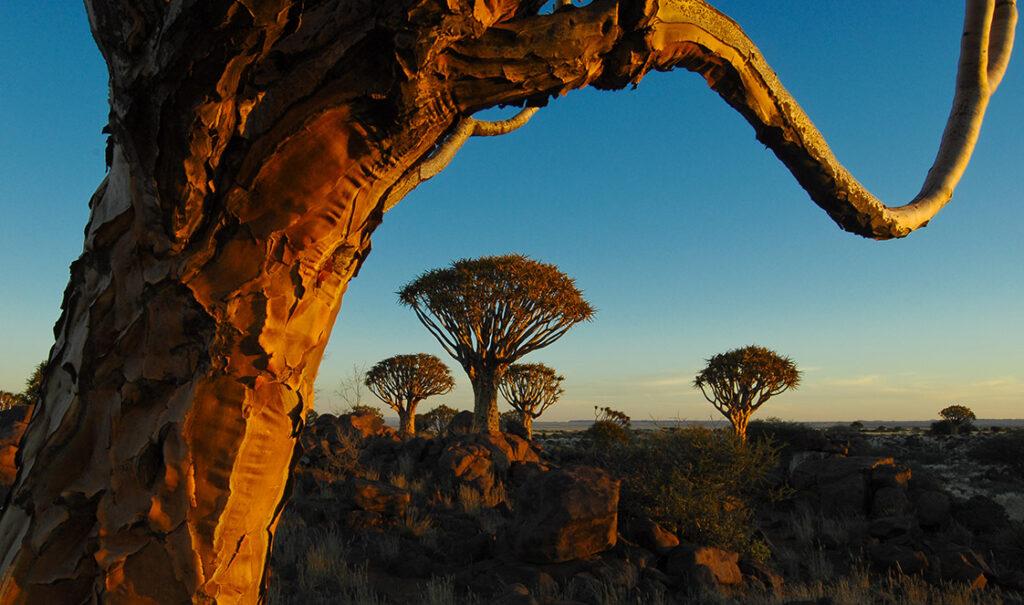
The Best of Namibia
Places Windhoek, Kalahari, Fish River Canyon, Luderitz, Tiras Mountains, Namib Desert, Swakopmund, Ugab Valley, Etosha National Park, Waterberg Plateau
from getting current exchange rate… per person sharing
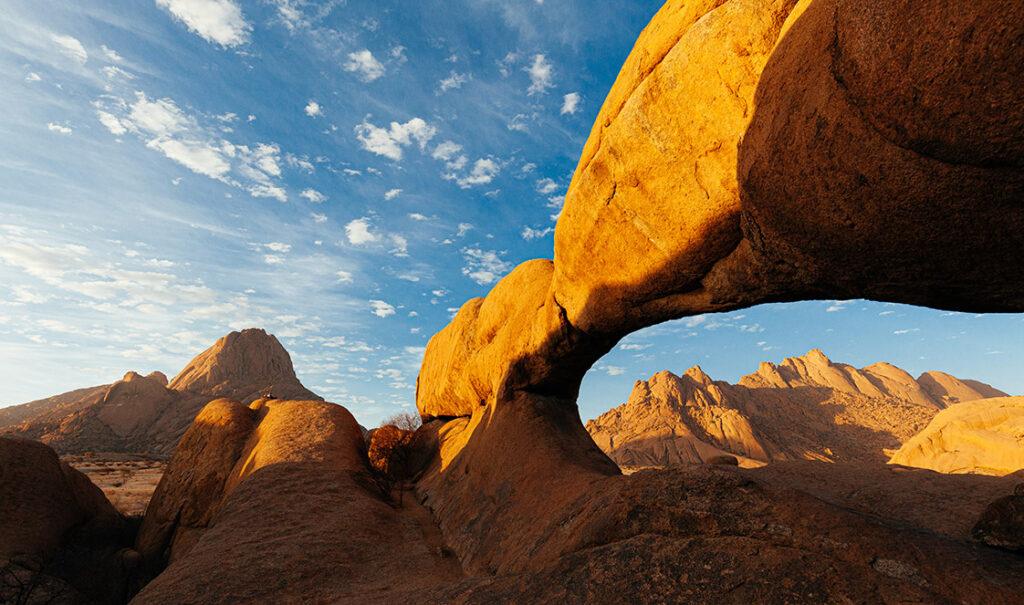
Magnificent Namibia
Places Windhoek, Kalahari, Keetmanshoop, Fish River Canyon, Luderitz, Namib Desert, Swakopmund, Erongo Mountains, Damaraland, Etosha National Park, Waterberg Plateau
from getting current exchange rate… per person sharing
Which breed are these horses?
Tracing back the exact breeds of the original horses from over 100 years ago is challenging. However, Namibia’s wild horses are known to have originated from Europe and South Africa. Namibia itself has no native horse populations. During the early 20th century, European breeds such as Trakehner and similar warmbloods were widely used as military, sports, and working horses, and were often shipped across continents. Another breed, known as Cape Horses, originated from horses initially imported to South Africa and evolved into a distinct breed over centuries. None of these horses were initially suited for the harsh terrain of the desert.

The first generation of free Namib horses were domesticated horses with minimal chances of survival without human help. Besides access to drinking water, the horses also found protection in the Diamond Area (now Tsa //Khaeb National Park), where the station was located, as entry to this area was restricted. This created the conditions for their gradual adaptation to the wilderness and subsequent evolution into the distinct breed we know today as Namibs – Namibian wild horses.
What makes them so special?
The horses’ most extraordinary trait is their perfect adaptation to the desert environment. Until today, the Garub water hole remains the only water source far and wide in the whole nature reserve. Wherever the wild horses may roam, they return to Garub to drink. Since food remains scarce in the area, especially after the sometimes non-existent rainy season, the horses often venture out far and wide. As the greenery dries up, the sparsely available grass loses its nutrients.
During the hot summer months between November and March, the wild horses need water roughly every 30 hours. During the colder winter months, the horses can go up to 72 hours without water. The Namibs carefully conserve their energy by moving slowly, covering less ground, minimising play, and avoiding aggressive behaviour as much as possible.
Namibia’s wild horses have also adapted to a diet consisting mainly of grass. In times of severe drought, locals provide the horses with hay and minerals. Their famous horse apples serve as a natural supplement – dining on their own dung, also known as “coprophagy,” is not uncommon in the animal kingdom. This kind of behaviour is especially common among young animals, who eat their mother’s faeces to get essential nutrients, microorganisms, and bacteria. This unconventional dietary behaviour is crucial for the horse’s healthy development, particularly in the inhospitable conditions of the desert. Mama’s dung contains roughly three times as much fat and twice as much protein compared to grass. Additionally, these energy bars are pre-digested, making them easier for the horse’s non-ruminant stomach to process than the cellulose found in grass.
Do you want to know more about travelling to Namibia?
Just get in touch.
How many wild horses are there in Namibia?
Without specifying an exact date, the „Namibia Wild Horses Foundation“ (NWHF) stated that the Ministry of Environment and Tourism “recently” counted 70 wild horses.
Who are their primary adversaries?
The Namibs’ population has always fluctuated, but in the past 10 years, it has dropped significantly below the previous average of 200 wild horses. One reason for these fluctuations are recurring droughts, a natural adversary, so to speak. In recent years, a group of hyenas has settled in the area, viewing the wild horses and their foals as easy prey. Between 2012 and 2019, not a single foal survived. An emergency intervention, which involved both feeding to distract the hyenas and eventually killing some of them, brought only temporary relief. A plan to relocate the hyenas failed, leaving them as an ongoing threat.
Humans are both foes and friends. Although poaching has been limited, the wild horses now face mortal danger on roads, where they are struck by cars and trucks. At the same time, humans are currently their only hope. Organisations like the “Namibia Wild Horses Foundation” are fighting alongside the horses for their survival.

Are the wild horses in Namibia endangered?
Regrettably, the answer is a resounding “yes.” If the horse’s offspring cannot be protected in the coming years, and the last remaining wild horses succumb to elements like drought, old age, hyena attacks, and car accidents, this may mark the end of wild horses in Namibia.
We are here to help with any questions as you plan your Namibia journey, including a visit to the Namib wild horses – whether on a guided group tour, a guided private tour or a self-drive adventure. Get in touch with us to start your Namibia adventure and experience the unique sight of the wild horses in the Namib desert.
Author: Juan Proll


