on Tripadvisor


Bwabwata National Park is located in the north-east of Namibia. It is known for its peaceful coexistence of humans and animals. This is made possible by a zoning system. Whether Bwabwata National Park is worth a visit, you will find out in today’s blog.
Many travellers on the B8 towards Katima Mulilo and the north-western border of Botswana don’t realise that they are passing through the Bwabwata National Park. It fills the narrow transit zone in the Zambezi Strip between the borders of Angola to the north and Botswana to the south. The Cubango and Kwando rivers form the natural borders to the west and east.

The Bwabwata National Park
Bwabwata National Park is divided into three core areas for wildlife and nature conservation: the Mahango Core Area and the Buffalo Core Area in the west of the park, and the Kwando Core Area in the east. There is also a multi-use area for the coexistence of humans and nature. This is a unique arrangement in Namibia. Apart from strictly regulated concessions for accommodations, village-like settlements, agriculture and livestock farming are not allowed in Namibia’s national parks. They represent the highest level of nature and wildlife conservation in the country. In Bwabwata, however, the government and local communities jointly manage the 6 274 km² national park, which was declared in 2007. This means that people can continue to live in their traditional areas and even benefit from tourism in the park. The sustainable protection of the local flora and fauna helps to secure their livelihoods.
Close cooperation is needed because the park is a corridor for elephants on their migration route between Angola and Botswana. Unfortunately, these gentle giants don’t care about the fencing systems and show up all over the park. Securing these corridors, controlling poaching and protecting local infrastructure requires proper cooperation.

It’s the constellations, together with the abundance of wildlife – including buffalo, crocodile, hippo, lion, leopard, zebra, various antelopes – and more bird species that make this national park so interesting. But is Bwabwata National Park worth a visit?
We help you plan your trip to Bwabwata National Park!
Just get in touch with us!
The vegetation in Bwabwata National Park
The area’s abundant rainfall and the influence of the rivers Kwando and Cavango, which changes its name to “Okavango” once it reaches Botswana, promise a variety of landscapes and vegetation. And indeed, tree and shrub savannahs in wetlands and floodplains, sand dunes, swamps, green floodplains and deciduous forests with Zambezi teak and wild seringa trees form an exciting contrast to the desert landscapes of much of Namibia.

Which animals can you see in Bwabwata National Park?
You can be lucky and see all sorts of animals the park has to offer while driving along the B8. Of the Big 5, only the rhino is not around. On my last trip on the national highway, I even saw cheetahs on the side of the road taking their midday siesta in the grey grass under an acacia bush.

But in general, the animals in Bwabwata are rather shy and don’t come too close to the tarmac road. It’s easy to miss them at higher speeds. The dense bush and often abundant water also make it difficult to spot the animals. It will feel like a classic safari, where you are not guaranteed to see wildlife, but the experience will be unforgettable. But they are there, sometimes more of them, sometimes fewer, and mostly in one of the following three core wildlife zones:
Our favourite tours in the Zambezi Region:

Marvels of Southern Africa
Places Windhoek, Namib Desert, Swakopmund, Damaraland, Etosha National Park, Zambezi Region, Chobe National Park, Victoria Falls
from getting current exchange rate… per person sharing

Highlights Windhoek to Victoria Falls
Places Namib Desert, Swakopmund, Etosha National Park, Kavango & Zambezi Region, Chobe National Park, Victoria Falls
from getting current exchange rate… per person sharing
Mahango Core Area
To the west of Cubango, on the border with Botswana, lies the Mahango Core Area of the Bwabwata National Park, a tempting destination for a safari. Herds of elephants and buffalo roam the bush and grasslands of the reserve. Hippos and Nile crocodiles dominate the banks and waters of this section of the Okavango wetlands. Giraffes, zebras, lions, leopards and hyenas can be seen along the way, with beautiful phoenix palms and giant baobabs. And with a bit of luck, you might also see the famous sable, roan and oryx antelopes roaming the forests.

The trail takes you from the B8 at Divundu to the C48/D3403, past the Popa Falls (which sound like waterfalls but are actually rapids) and on to the Botswana border. There are no fences between the two countries, so wildlife can roam freely.
There aren’t many roads to the left or right of the main road in the Mahango Core Area. If you are travelling in a two-wheel drive vehicle, you can easily explore the Scenic Loop Drive in addition to the transit route. It heads towards the Cubango River and if you follow it for a few kilometres, you will pass the viewpoint and the picnic spot Kwetche, before finally reaching the main road. For 4×4 drivers, there are more routes in the western part of the park, including the 20km Circular Drive Loop, which usually offers good game viewing.
Buffalo Core Area
If it feels quiet in the Mahango Core Area, there’s almost nothing going on in the Buffalo Core Area. The area is not as well-known and therefore still an insider tip for safari enthusiasts. On the east side of the Cubango River, access is also via the B8. If you are coming from Divundu, you will see the “Buffalo Core Area” sign 12 km after the Cubango bridge and turn right. The buildings of an old military station reveal the history of the area. The base served the South Africans during their mandate in Namibia as a support point in their fight against the freedom movement. Today it provides a fascinating backdrop for game drives.

Doing a self-drive safari here works quite well. It is just a bit sandy here and there, and muddy, mushy and churned in the rainy season. You are on the safe side with a 4×4. Most of the road follows the Cubango River. The contrast to Etosha National Park is easy to see: an impressive river landscape and beautiful floodplains. Crocodiles and hippos live in the water, water birds love the wetlands, large herds of elephants come here to drink and bathe and buffalo graze peacefully in the floodplains. Another speciality are the many roan and sable antelopes, which are usually seen as trophies on private farms.
Kwando Core Area
While the Mahango and Buffalo Core Areas lie close together on the western side of Bwabwata National Park, the Kwando Core Area lies on the eastern side. Of the three core areas, the Kwando Core Area is the largest at approximately 1280 km². However, you should only leave the main road if you are travelling in a 4×4. There are many sandy stretches which make driving difficult even in the dry season. This adds to the adventure value of the trip. You can also see a lot of wildlife. That is, if you don’t choose one of those unlucky days when the animals are resting in the deep bush.
A real highlight in this region is the drive south along the Kwando River to ‘Horse Shoe’, which is no longer an insider tip. From above, it really does look like a horse’s hoof. On the way, it is worth stopping on the hills where Fort Doppies once stood – not a real fort but a simple military base during the Angolan war. From here you have a stunning view over the surrounding floodplains.

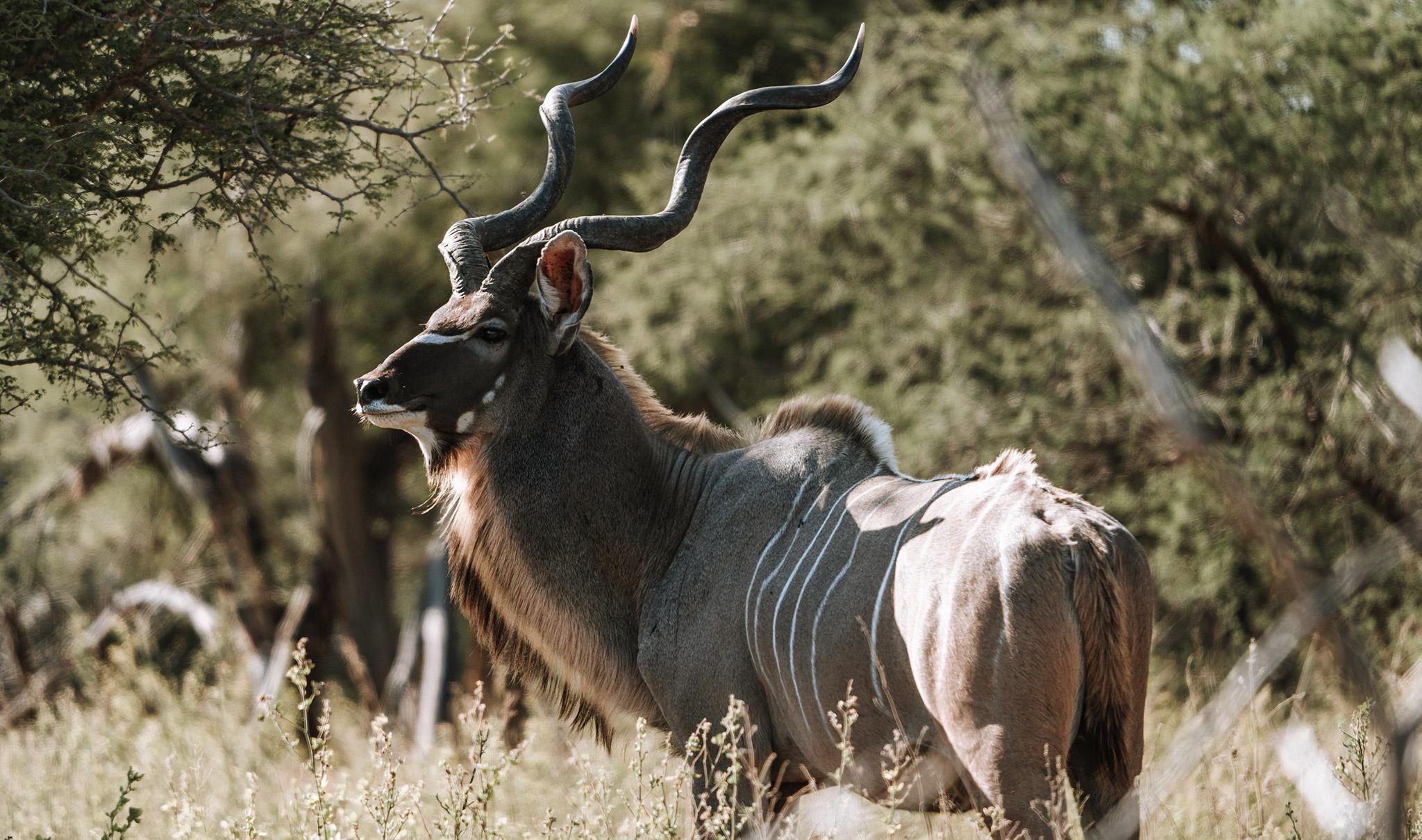
Sitatunga, reedbuck and lechwe antelope are common in this area. Roan and sable antelope, waterbuck, kudu, impala, giraffe, and wildebeest are also common. Hippos visit the camps in the area. Lions, leopards, cheetahs, African wild dogs, and hyenas add to the excitement. But most of all, it is the masses of elephants that escape the dryness of other areas and like to stop at the Horse Shoe on their migratory tours. They turn the lagoon into a giant open-air swimming pool. Exclusive use, of course.
Tourism in Bwabwata National Park
Bwabwata is not as touristy as other parts of Namibia, as it is off the typical tourist track. Most travellers come here on their way to the Okavango Delta in Botswana or to Chobe National Park, with a detour to Victoria Falls.
Where to stay in Bwabwata National Park? Available accommodations
There are great lodge options around the park. Near Horse Shoe, in the Kwando area, there is the stunning Nambwa Tented Lodge and Kazile Island Lodge. On the eastern side you can find Riverdance Lodge, Divava Okavango Lodge or Shametu Lodge & Campsites. If you don’t want to pay these prices and want to go camping instead, there are cheaper alternatives. Even right on site at some of the accommodation mentioned above. Most of them offer options such as game drives, bush walks, boat trips or a visit to the Khwe Living Museum.

When is the best time to visit the Bwabwata National Park?
You can visit Bwabwata National Park all year round. But it is hot and humid during the rainy season, which is mainly between January and March. The local winter months are drier and cooler. But there are still plenty of hours of warm sunshine. During the colder winter dry season, many water sources dry up and wildlife moves closer together. The months of May to October are therefore the best time for game viewing in Bwabwata National Park.
If you are planning a holiday in the Zambezi Region, make sure you are aware of malaria prophylaxis. This is especially important during the rainy season.

Conclusion
To answer the question: “Is Bwabwata National Park worth a visit?”, I can only say: “Yes”.
It is the remoteness, the contrast to Namibia’s desert landscapes, the lack of fences, the chance to see uncommon animals such as the sitatunga or lechwe antelope, the number of elephants that suddenly pop up out of the bush and the brave concept of creating a framework within a national park where humans and animals can coexist. On top of this, the area is not always easy to explore, making it a real challenge for the adventurous safari lover.
So, start your Bwabwata adventure. We are happy to answer any questions you may have and to help you plan your trip to Namibia – whether you are on a guided tour or a self-drive tour. As a local company, we are always well informed about the current situation. Just get in touch with us!
Author: Juan Proll