on Tripadvisor


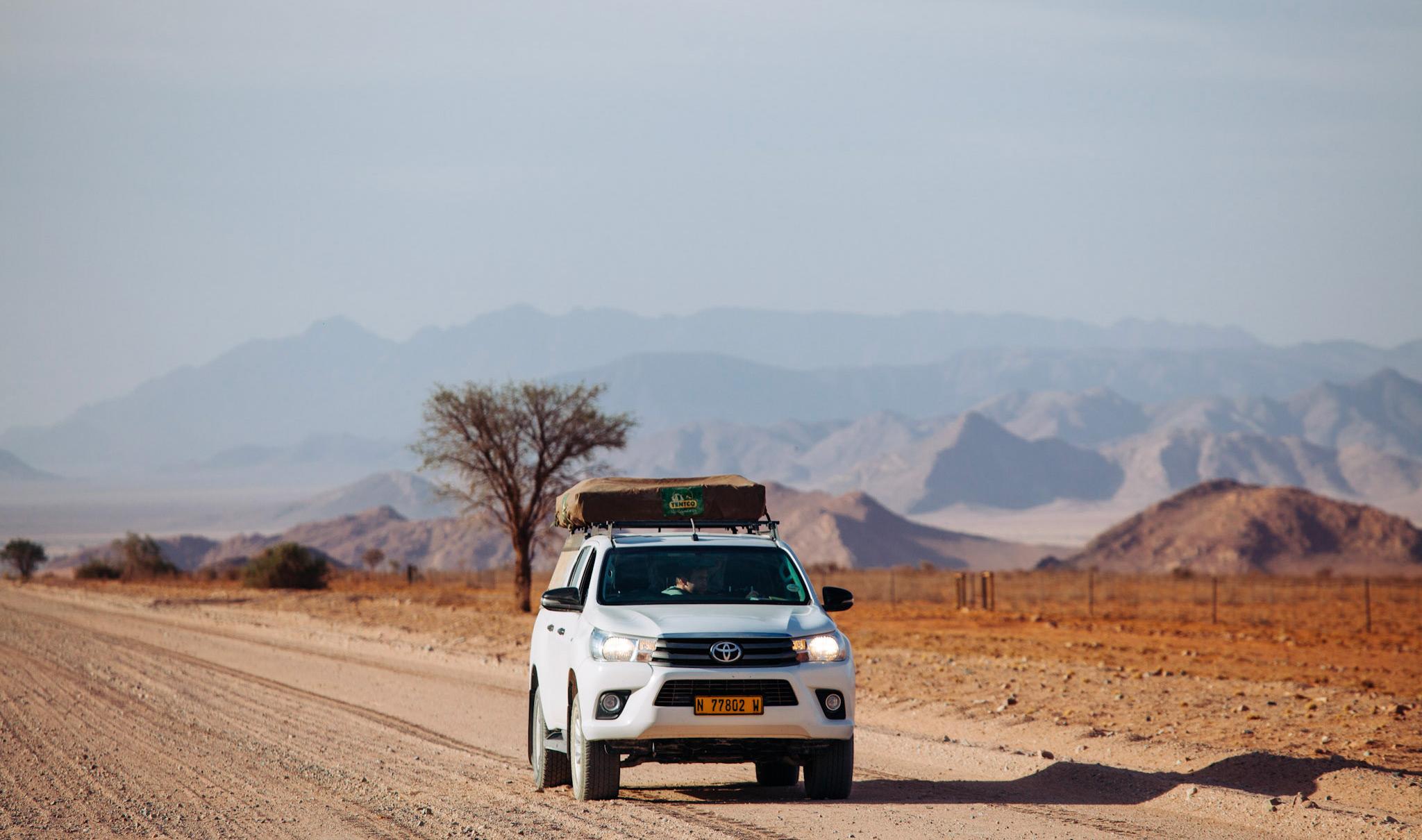
What makes a road trip through Namibia truly memorable? It is not simply reaching Sossusvlei, Etosha or the Fish River Canyon. It is what happens between them: the changing colour of the earth, the empty roads.
When we asked our General Manager, Benjamin Brand, to choose his favourite Namibia road trip itinerary, he selected our 20-day Best of Namibia self-drive tour. Not because it includes every corner of the country. No single holiday can do that. He chose it because it gives travellers enough time to appreciate Namibia’s scale and brings together the things he values most: wide-open landscapes, remarkable history, wildlife, photography and the freedom to get out of the car and explore on foot.
These are the roads, places and small moments that make the journey special to him.
How Many Days Do You Need for a Namibia Road Trip?
“Namibia needs time,” says Benjamin. It is a large country, its highlights are spread far apart, and the distances are part of the experience rather than an inconvenience to hurry through. On some roads, you may travel for hours without another vehicle passing. That emptiness is one of the reasons people come.
A Twenty day Namibia self-drive itinerary allow you to travel from the Kalahari and Fish River Canyon in the south to Etosha National Park farther north without racing between famous sights. There is time for two-night stays, walks and optional activities.
Even then, you will not see all of Namibia. The remote far north and the green Zambezi Region would require an extension or another journey. The Best of Namibia is exactly what its name suggests: a broad and beautifully varied introduction, not an attempt to squeeze the entire country into one trip.
What Is the Best Road Trip Itinerary for Namibia?
There is no single route that suits everyone. For Benjamin, however, this Namibia self-drive itinerary works because it keeps changing character. Red dunes give way to rocky canyons, abandoned buildings filled with sand, the desert meets the Atlantic, and eventually wildlife takes centre stage in Etosha. Just when you think you understand Namibia, the landscape shifts again.
Which Southern Namibia Stops Belong on the Route?
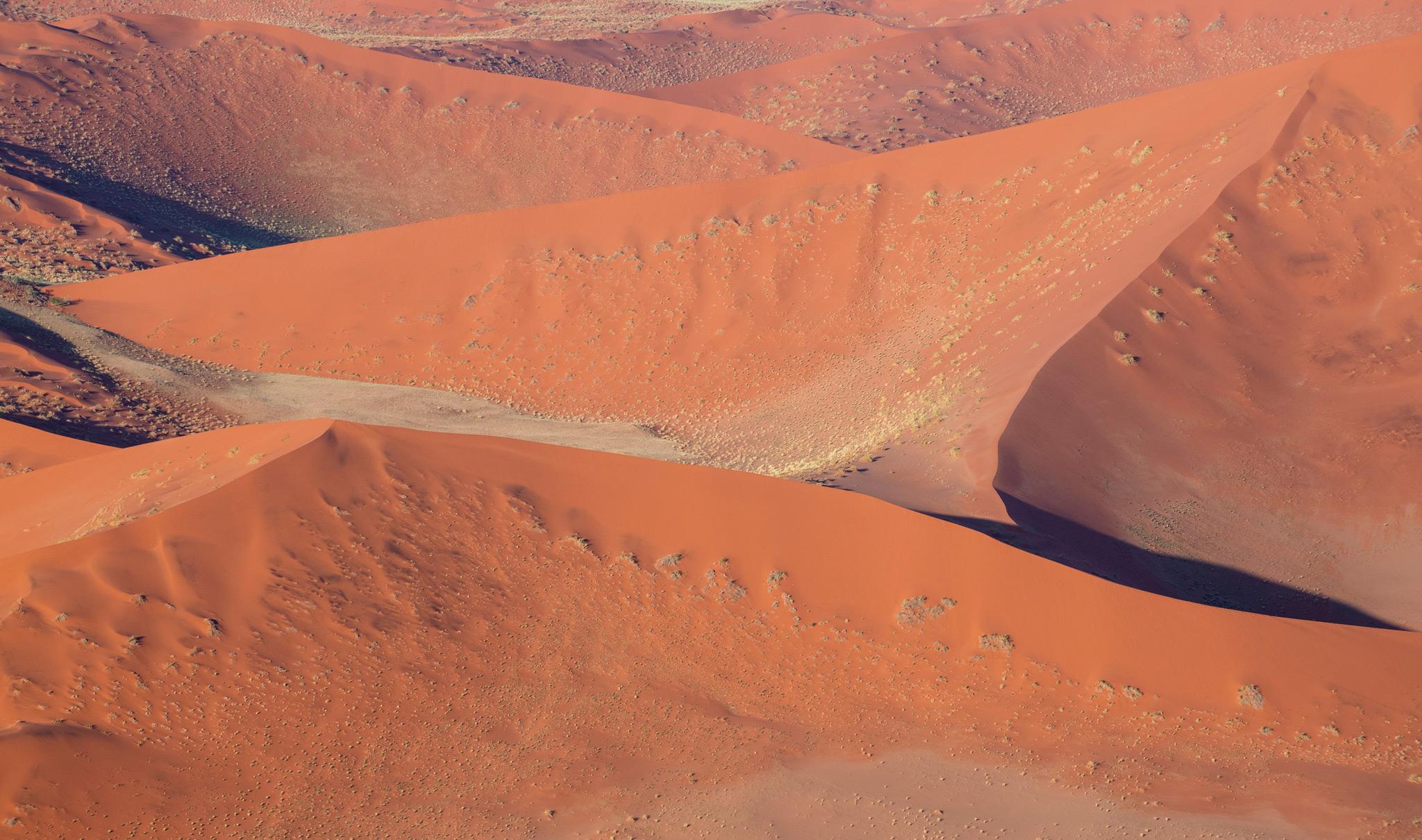
The journey begins in Windhoek before turning south towards the Kalahari, one of Benjamin’s favourite regions. Its parallel red dunes are a striking first taste of the country, especially in low morning or evening light. Oryx, springbok and giraffes move between the dunes, while darkness reveals a sky almost free from artificial light.
Near Keetmanshoop, the Quiver Tree Forest and Giant’s Playground offer something completely different. Quiver trees rise among dark boulders, while great blocks of dolerite appear stacked by an absent-minded giant. Both locations reward unhurried photography, particularly in soft light.
Then comes the Fish River Canyon. Fish River Lodge is one of Benjamin’s preferred stays because of its position beside the canyon. Which side offers better light: sunrise or sunset? His answer is reassuringly undecided. You may see the sun rise beyond the gorge, or watch rays pour into the canyon from behind you, revealing its folds and immense depth. Each offers a different performance of light.

What Is the Most Scenic Road in Namibia?
Before the road turns north, the journey visits Lüderitz and Kolmanskop. Kolmanskop appeals to two of Benjamin’s great interests: history and photography. Once a diamond-mining settlement, it is now a place where sand drifts through abandoned rooms. Light enters broken windows; faded wallpaper and half-buried staircases hint at lives once lived here.
“You can be the biggest amateur photographer and get shots at Kolmanskop that make you look like a professional,” Benjamin says. Yet the ghost town is more than a photogenic ruin. Understanding how it began, prospered and was eventually abandoned adds a human chapter to a route often dominated by geology and scenery.
From Aus, this Namibia self-drive itinerary follows the D707 towards the NamibRand area. Benjamin considers it one of Namibia’s most scenic drives. Mountains, grasslands and desert colours unfold beside a road that encourages frequent stops. Greenfire Desert Lodge makes a memorable base amid the stillness.
What Is Benjamin’s Insider Tip for Sossusvlei?
At Sossusvlei, many visitors head straight for Dune 45 at sunrise. Benjamin enjoys it when it is quiet. During busier periods, he prefers Elim Dune. Its turn-off is close to the entrance and away from the main stream of vehicles.
His ideal morning is pleasingly simple: coffee in a flask, a few rusks and sunrise from the dune. The light slowly catches the grass and sand while the day gathers around you. It is not about finding a “secret” place that nobody else knows. It is about choosing a quieter alternative and allowing enough time to notice the morning properly.
From the Namib, the road continues towards Swakopmund and the Atlantic. The transition can feel startling. After days of heat, dust and desert horizons, cool coastal air arrives. Fog may soften the edges of the landscape and the ocean replaces the dunes as the dominant presence.
“There is something primal about being in the desert and then arriving at the ocean,” Benjamin explains. “It does something to you. You appreciate it even more when you are there.”
Swakopmund provides a change of pace. Explore the desert in search of its Little Five, take a boat trip looking for marine life, or spend time in town before returning to the road.

Where Can You See Desert-Adapted Elephants?
North of the coast lies Damaraland, a region of dry riverbeds, distant mountains and rock formations that seem to change colour as the sun moves. The scenery alone earns it a place among Benjamin’s highlights, but Damaraland also offers the possibility of searching for desert-adapted elephants with an experienced local guide.
These African elephants have adapted their behaviour to an extremely arid environment. They travel considerable distances between food and water through landscapes shared with rural communities. Sightings are never guaranteed, making every encounter more meaningful.
Their future also depends on people and elephants being able to live alongside one another. Elephant-Human Relations Aid, better known as EHRA, works with communities on practical ways to reduce conflict, including protecting water infrastructure, monitoring elephant herds and teaching people how to respond safely during encounters. Namibia-Experience supports this work. Seeing the elephants in their environment can therefore become more than another wildlife sighting; it offers a glimpse into the realities of conservation beyond national park boundaries.
What Makes an Etosha Self-Drive Safari Special?
Wildlife accompanies much of this Namibia road trip itinerary. You might see wild horses near Aus, tiny desert creatures outside Swakopmund or an oryx standing beside an apparently empty road. At Etosha National Park, however, the focus shifts decisively towards safari.
Etosha rewards patience. A game drive here need not mean rushing from one sighting to the next. Stop at a waterhole, switch off the engine and wait. Dust hangs in the pale air. A line of zebras approaches, stops and assesses the scene. Springbok edge closer. Giraffes spread their front legs and lower their heads awkwardly to drink, pausing often to look around. An elephant’s arrival may rearrange the entire gathering without any obvious hurry.
Remain there and you see more than a list of species. You notice who yields space, who watches whom and how alertness passes through the animals before you spot its cause. Benjamin values this opportunity to observe behaviour and interactions rather than merely recording another sighting.
Self-driving gives you control over how long you stay. There is also value in occasionally handing the responsibility to someone else. If you book two nights in Etosha with us, you can book a complimentary full-day game drive in our open game-viewing vehicle with one of our professional guides. The raised, open vehicle changes your perspective, while the guide can interpret tracks, behaviour and subtle signs that are easily missed. After many days behind the wheel, it is rather pleasant to sit back, look outward and let an expert lead the search.

Why Finish at Waterberg Plateau?
Waterberg provides what Benjamin calls a “soft ending” to the journey. Its greener vegetation and brick-red cliffs feel markedly different from the deserts, coast and open plains that came before. There are walking trails to explore, birds in the trees and time to stretch your legs once more before returning to Windhoek.
It is a gentle final change of scenery, and one last reminder that Namibia refuses to remain only one thing for long.
Do You Spend the Whole Trip in the Car?
There are substantial driving distances on a Namibia road trip itinerary of this scale, but this does not have to be a holiday experienced entirely through glass. Benjamin deliberately values routes that offer opportunities to walk. After several hours on the road, stepping onto a trail does more than loosen stiff legs. Best of Namibia offers ample hiking and walking opportunities.
On foot, the landscape becomes immediate. You smell sun-warmed grass and dry earth. Tracks, stones and hardy plants that disappear at driving speed come into focus. The silence sounds different once the engine has stopped. From canyon walks and desert trails to the greener paths around Waterberg, these pauses provide a second perspective on the country.
They also create balance. The long drives reveal Namibia’s scale; the walks reveal its detail.

Follow Benjamin’s Favourite Namibia Road Trip Itinerary
What makes the Best of Namibia Benjamin’s favourite journey is not one lodge, road or wildlife encounter. It is the thread connecting them. Namibia’s geological story is visible in its canyons, dunes and mountains. Human history emerges at Kolmanskop and elsewhere along the route. Wildlife appears throughout, then takes centre stage in Etosha. And between these highlights lie the open roads that give a self-drive journey its freedom.
If you have the time, this 20-day route lets Namibia unfold rather than flash past. Our travel experts can arrange the accommodation, rental vehicle and route while leaving you the independence to travel at your own pace. Get in touch with us and start planning your own Namibia road trip itinerary.