on Tripadvisor


Namibia is a colourful patchwork of a country: Slightly incongruous but still deeply African, there are many different things to discover here. Whether you do a self-drive trip, go on a guided camping tour or a lodge tour – a country like no other awaits you. If you are wondering where to go in Namibia, we share some inspiration. In this blog we introduce you to Namibia’s mystical coastline, the heritage of German colonialism that left Bavarian-style towns in the middle of the desert, the second-largest canyon in the world, and the curious history of the Zambezi strip.

1. Skeleton Coast: The end of the earth is spotted with whale skeletons
Stretching over 500 kilometres from Swakopmund to the Angolan border, the Skeleton Coast is pure untouched wilderness. The coast is frequently covered in a thick fog, which creates treacherous conditions for passing ships. The fog is a result of the icy cold Benguela Current clashing with the hot desert. The dense fog has claimed many ships, whose “skeletons” can be found on the shore. There is an estimate of more than 1000 ship stranded on the coast.

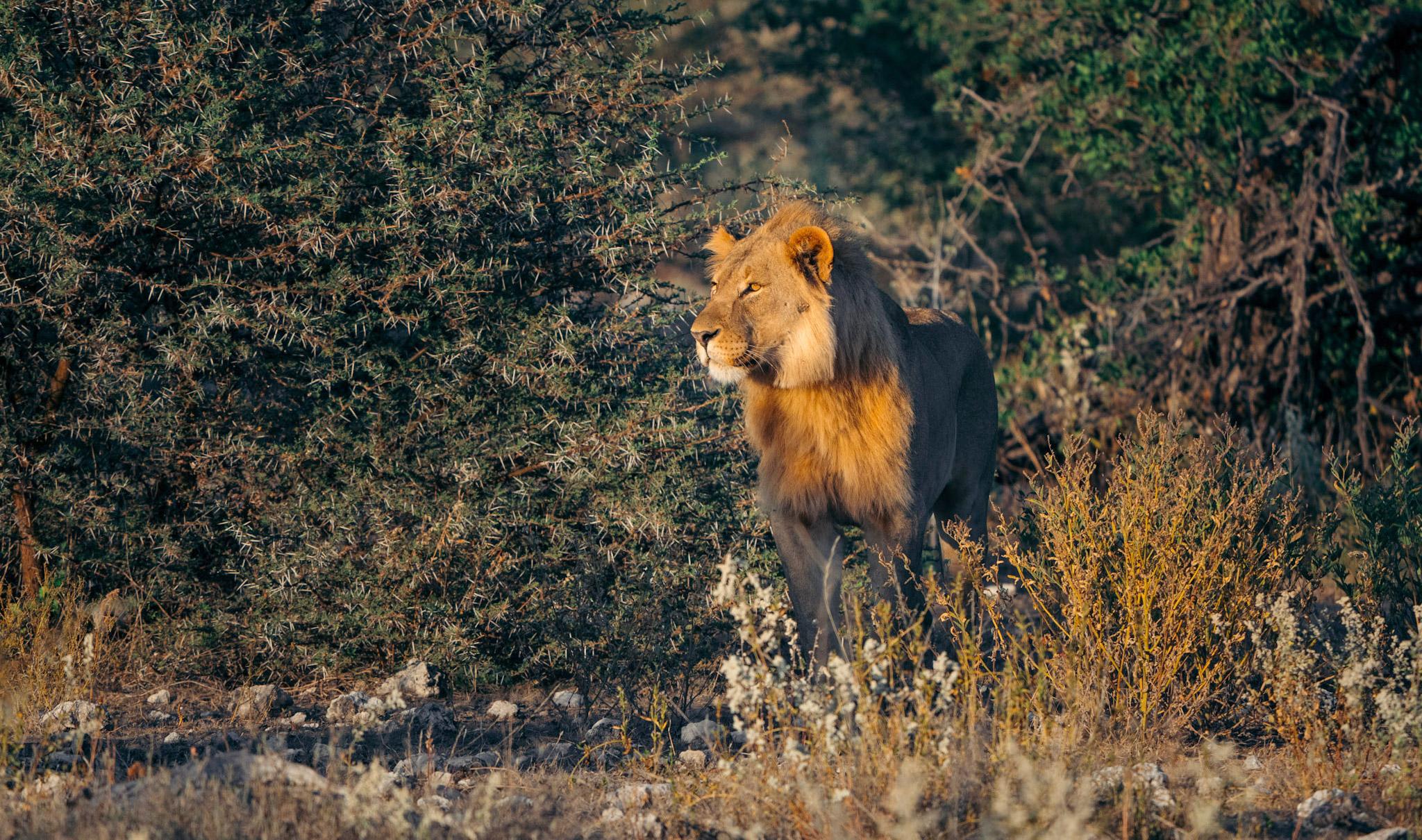
However, the Skeleton Coast most likely got its name from the many stranded southern right whales whose skeletons can be seen all over the coast. The Ovahimba who are based in Namibia’s far north-east use the bones to build their huts. You will also find desert lions here, who adapted to the harsh conditions and hunt marine life. Even desert elephants are sometimes seen on the coast, and there are over eleven shark species in the water.

The upwelling caused by the Benguela Current makes great conditions for surfing or beach fishing. If you are not into that, simply enjoy the mystical scenery of this place that is also referred to as “the end of the Earth”.
What to do: Treat yourself to a scenic flight over the Skeleton Coast! Maybe you will even spot some desert-dwelling lions or elephants from up there!
2. Luderitz: Learn about colonialism and explore the ghost town Kolmanskop
Luderitz is a small seaport located in the south of Namibia and on the list of where to go for those interested in the country’s history. It was the first German enclave in South West Africa, present-day Namibia. The town is named after its founder, Franz Adolf Eduard Lüderitz, a merchant from Bremen in Germany. Luderitz looks like a displaced Bavarian city in the middle of Africa: Until this day, you find old houses from the German colonial times here, built in Wilhelminian Art Deco.

Engage critically with the heritage of German colonialism in the desert of Namibia. The most important building in Luderitz and a national monument is The Deutsche Africa Bank building, which dates back to 1907. Make sure to also pay a visit to the township in Luderitz. As South Africa imposed its Apartheid laws on Namibia until 1990, you also see the legacy of Apartheid here.
Nearby lies the ghost town of Kolmanskop, which was a base for diamond mining. Kolmanskop was abandoned when it was no longer profitable to mine diamonds in this area. The industry then returned to South Africa for better opportunities. Nowadays, the empty houses of Kolmanskop are inhabited by nature, namely sand and wind. The sand dunes that have overtaken the town make the setting both beautiful and bizarre.

Good to know: When in the area, make sure to keep your eyes open for wild horses that are seen around Garub. Until this day, no one is certain about their origin.
3. Fish River Canyon: Explore the second largest canyon in the world
The Fish River Canyon is the largest canyon in Africa and, after the Grand Canyon in Arizona, USA, the second biggest canyon in the world. It stretches over 180 kilometres, from Sesriem down to the Orange River. The mighty ravine in the south of Namibia was carved out by the Fish River through a process that began over 500 million years ago.

Get an idea of its immense scale and see the beauty of its rugged terrain from one of the many lookouts. If you want to fully immerse yourself into this geological wonder, you should consider doing the famous Fish River Canyon Hiking Trail. However, the seasonal multiple-day hike through the canyon is a real challenge, even for experienced hikers. If you don’t want to hike the 85 km long trail, there are some shorter and easier walks that you can do.
Further, the Fish River Canyon is known for the hot springs of /Ai-/Ais. The water bubbles out of the ground at 60°C, and you can bathe in the healing waters in the resort at the hot springs.
Where to stay: The quirky Canyon Roadhouse is a must-visit even if you’re not staying overnight.
4. Swakopmund: An activity-packed coastal town
If you’re looking to integrate fun-filled activities into your Namibia, Swakopmund should definitely be on your list of where to go. Swakop is Namibia’s biggest coastal town. Similar to Luderitz on the south coast, Swakopmund can feel like a German holiday town on the North Sea. The town’s origins can be seen in the architecture of old German colonial buildings. Still, the city is thoroughly African, and it is this multidimensionality that makes it compelling. If you are looking for a bustling spot where you can socialize with other travellers and do all sorts of activities, this is where to go. Swakopmund is also a good starting point for trips up the Skeleton Coast.

The dune belt behind Swakopmund offers adventurous travellers a wide range of outdoor activities: You can do paragliding, quad bike safaris, sandboarding, skydiving, surfing or go fishing. Or what about a scenic flight over the desert or a day trip to the seal colony at Cape Cross? Also, make sure not to miss the fresh seafood!
Where to stay: The Organic Square Guesthouse is a modern guesthouse, just a five minutes’ walk from the beach.
5. A sea of sand and its tallest dune: Sossusvlei and the „Big Daddy”
The Sossusvlei is a large, white, salt and clay pan that is located in the Namib-Naukluft National Park, one of the largest conservation areas in Africa. It lies among the monumental red dunes of the Namib-Naukluft National Park in the central Namib Desert. The tallest dune in the Sossusvlei area is quite fittingly called “Big Daddy”. This magnificent dune is 325 m high and well worth a trek to the top. From the top of Big Daddy, you have a stunning view of the surrounding sea of sand. The descend from the top is fun, you can run, jump and roll down the high dune right into the Deadvlei, the pan of old trees.

Deadvlei, which means “dead marsh”, once looked like the Sossusvlei. But some 900 years ago, the climate dried up and dunes cut the Deadvlei off from the river. You might have seen the iconic scenery in pictures: Orange dunes are contrasting the blue sky. Dead and almost black tree trunks are sticking out of the white ground. These trees are estimated to be 900 years old, still, they have not decomposed due to the dry climate.

Make sure to arrive early in the morning to avoid crowds and, more importantly, the burning sun! Wear closed shoes and remember to take enough water for the walk.
When to go: The earlier the better! Take in the sunrise above the dunes and make sure to be done hiking Big Daddy before the midday sun burns you.
6. Etosha National Park: where to go in Namibia for an exciting safari
For many travellers, the Etosha National Park is top of mind when asked where to go in Namibia. Etosha means „great white area” in Oshindonga. The name refers to the huge salt pan that is the national park’s essence. The Etosha pan is a saline desert that covers almost a quarter of the national park and can even be seen from space. Its scenery is so magical that it was used as a backdrop during the filming of Kubrick’s 2001: A Space Odyssey.

When it rains, water pools in the pan and converts it into a shallow lagoon, attracting flamingos and pelicans. Etosha has an extraordinary variety of large mammals. You find the rare and endangered black rhino here, as well as the black-faced impala. Generally, you can spot the wildlife quite easily as the plant life is so sparse.
Springbok and zebra, as well as oryx, kudu, giraffe and wildebeest, are common sightings in Etosha. The predator most often heard and seen is the lion. During dry season, animals congregate at the waterholes making an Etosha safari one of the most rewarding game viewing experiences in Southern Africa well worth a visit. Explore Etosha on a guided safari together with an experienced guide.

Where to stay: If you want to stay inside the national park, you will need to stay at one of the more basic state-run camps and can enjoy watching wildlife come to the waterholes at night. If you prefer a more luxurious camp with great ambience and service, you will find these just outside the park.
7. The Zambezi Region: where to go in Namibia off the beaten track
The Zambezi Region, previously known as Caprivi Strip, is situated in the far north-east of the country. When you’re considering where to go in Namibia, wanting to include more than jus the Top 10 popular highlights, this is for you: The Zambezi Region is one of the 14 regions of Namibia. When you look at the map, the it is the peculiar looking rectangle in the North of Namibia, that looks like it is pasted to the rest of the country. German settlers acquired this piece of land in the late 19th century, hoping it would give them access to East Africa through the Zambezi river. Unfortunately for the Germans, they were oblivious of the Victoria Falls, which are blocking the route to the river. Today, Zambezi is the only region that shares borders with 4 other countries: Zimbabwe, Zambia, Botswana and Angola.

Unlike the rest of Namibia, which is very dry and barely populated, the Zambezi Region is tropical and green. You almost feel like you are already in East Africa: You will see the typical small villages and, overall, just more people.

When in the area, make sure to visit the Mahango Game Reserve of the Bwabwata National Park. This national park is a beautiful little gem far off the beaten track and a nice spot to observe animals away from the crowds. Experience unspoilt bush and a true wilderness feel.
Where to stay: At the Riverdance Lodge, a little hidden paradise, you can stay in a bungalow with a deck, from which you can overlook the river.
The vastness of Namibia and its complexity, not only in terms of its nature but also historically, make it a very compelling travel destination. Often nonchalantly referred to as the “big desert” with no people, this title does not do this beautiful country justice. Our team at Namibia-Experience is happy to help you make your Namibia travels a once in a lifetime experience. We not only advise you where to go but are on the ground right where you need us. Get in touch!
Author: Johanna Höß